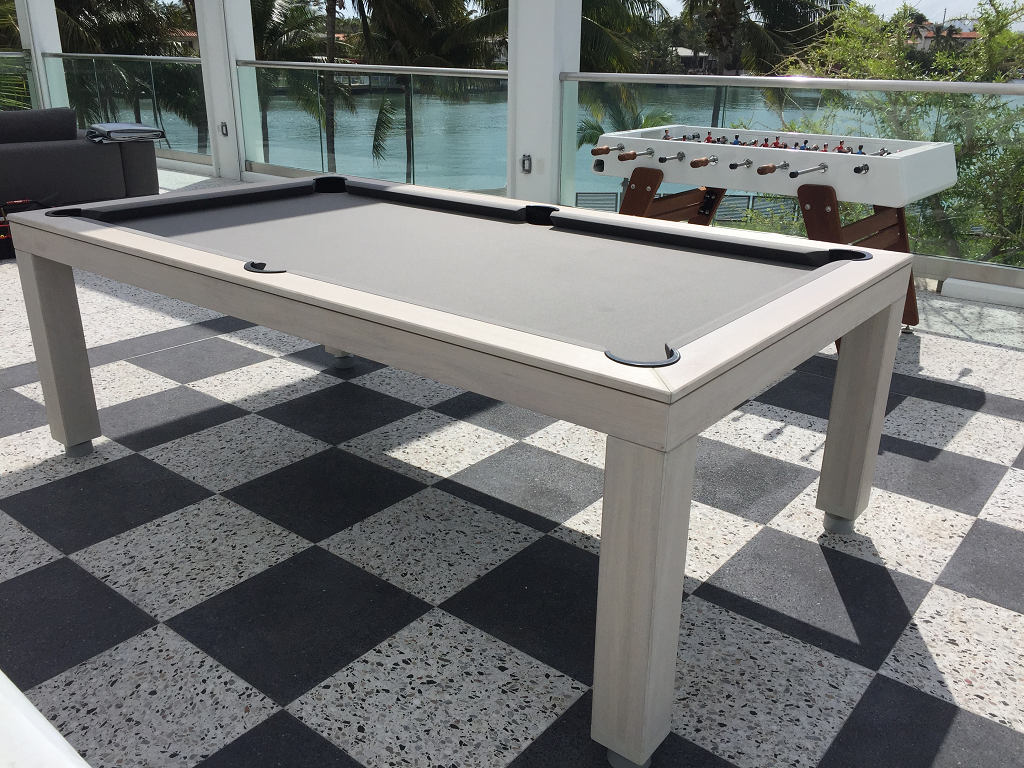
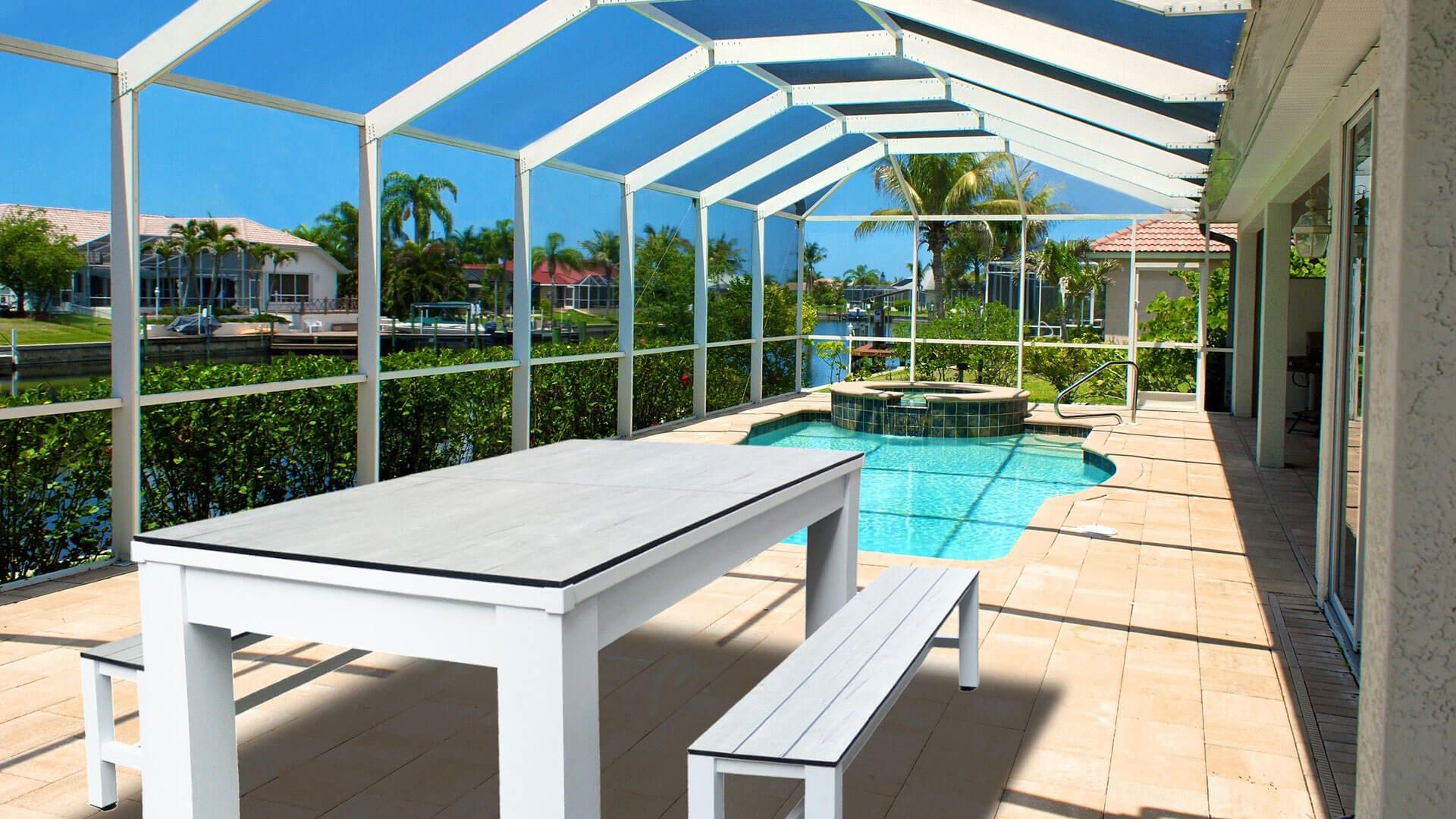
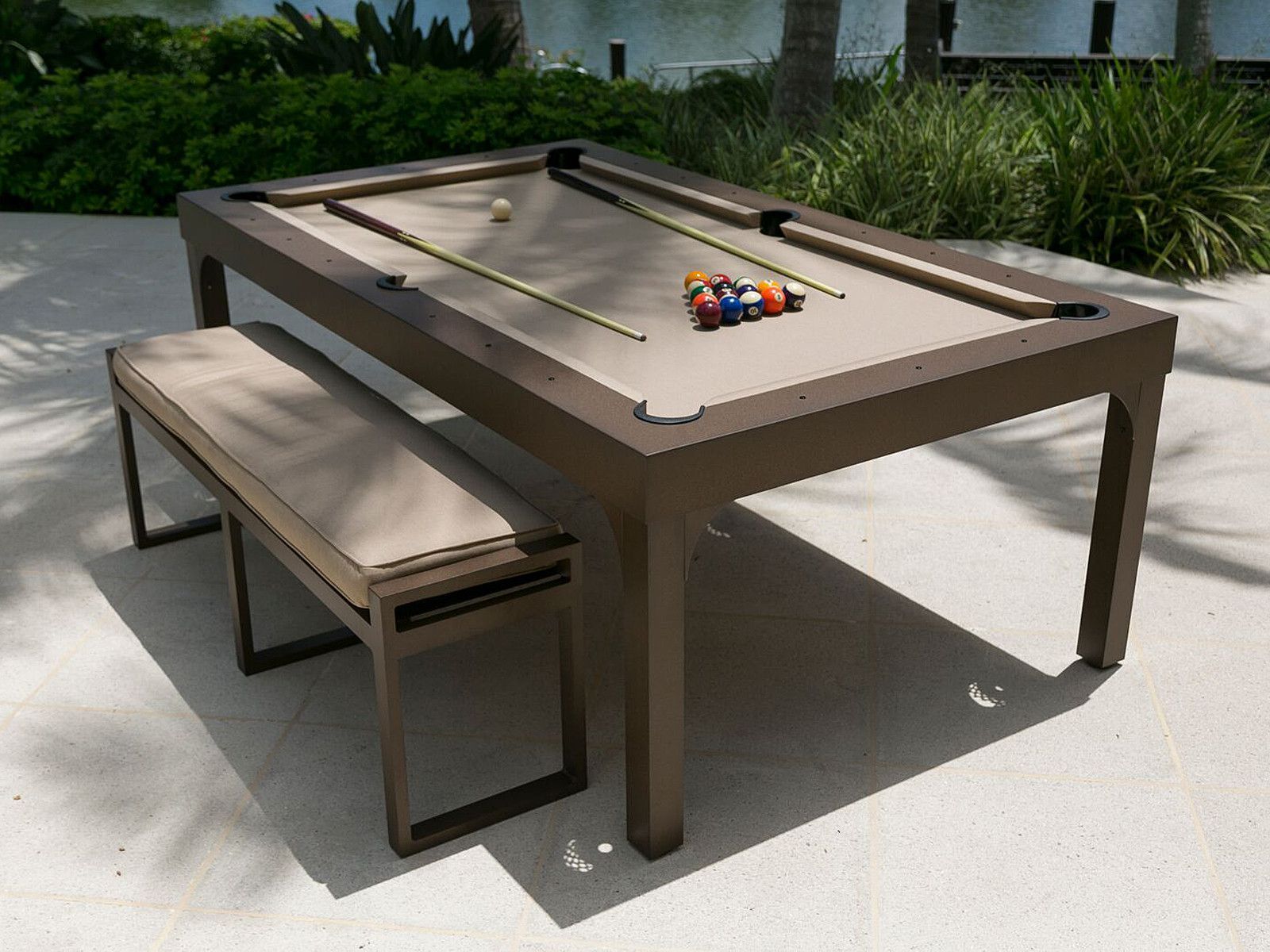
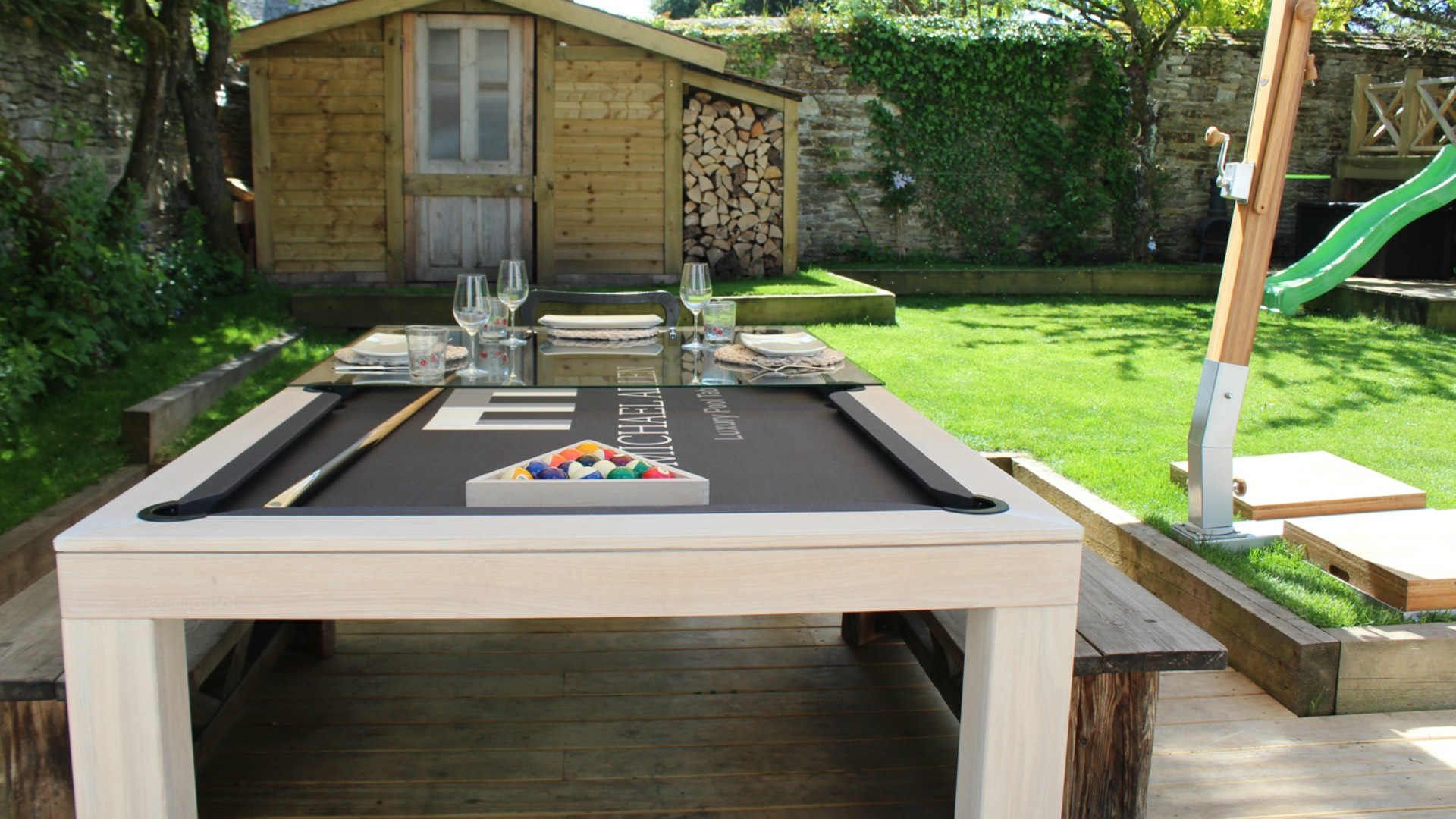
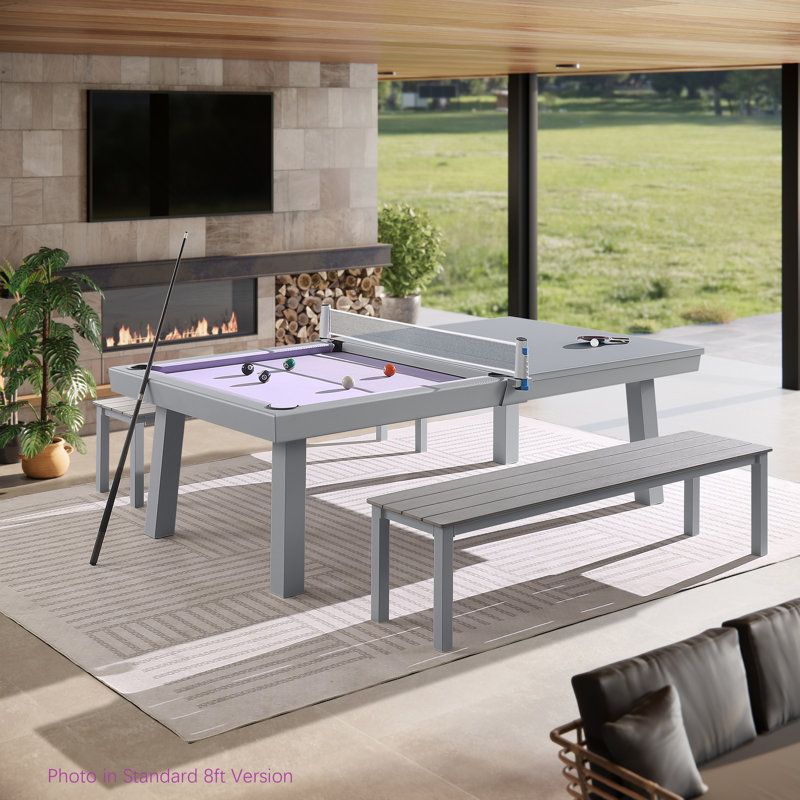
You’ve probably seen them. Those sleek, multi-purpose tables sitting on patios across the country. By day, they’re the center of family dinners, holding plates of grilled chicken and cold drinks. By night, the top comes off, the cues come out, and the game begins. It’s the ultimate space-saver, right? A two-in-one deal that makes sense for modern living. But here’s the thing that keeps coming up in conversations with folks who really know their billiards: if you’re going to go through the trouble of having a convertible table outside, don’t skimp on what’s underneath that dining top.
Specifically, we’re talking about slate.
It might seem like overkill. After all, it’s just a rock, right? And it’s going to be covered most of the time anyway. Why does it matter if the bed is made of slate, wood, or some high-tech composite when rain and humidity are already battling your setup? Well, as it turns out, it matters a lot. More than you’d think. In fact, skipping slate for an outdoor convertible table is kinda like building a house on sand. It might look fine for a bit, but sooner or later, things are gonna shift. And when they do, your game suffers. Let’s dig into why this ancient stone is still the king of the hill, even in 2026, and especially when you’re trying to eat dinner on it too.
The Warping Nightmare: Why Wood Fails Outdoors
Let’s start with the obvious enemy: moisture. If you live anywhere that isn’t a desert, your outdoor furniture deals with humidity. Even if you have a nice covered patio, the air holds water. Wood, which is the primary alternative to slate in cheaper tables, is basically a sponge. It breathes. It expands when it’s wet and shrinks when it’s dry. This cycle is brutal on a pool table bed.
Imagine playing a game where the table isn’t flat. Sounds annoying, right? That’s exactly what happens with wood beds outdoors. Over time, the center might dip, or the corners might lift. You’ll notice it immediately when you try to shoot a straight shot. The ball will curve off course, not because of your spin, but because the surface itself is warped. It’s frustrating. And once wood warps, there’s no fixing it. You can’t just sand it down; the structural integrity is gone.
Slate, on the other hand, doesn’t care about humidity. It’s stone. It’s dense. It doesn’t absorb water, and it doesn’t expand or contract with temperature changes the way wood does. Sure, extreme freeze-thaw cycles can be tough on any material, but slate is incredibly stable. When you put a heavy dining top on a wood-based table, you’re adding stress to a material that’s already struggling with the environment. With slate, that weight is just another thing resting on a solid, unchanging foundation. It’s the difference between a shaky card table and a granite countertop. One wobbles; the other stays put.
Flatness Is Everything: The Physics of the Roll
Billiards is a game of precision. It’s geometry in motion. For the balls to roll true, the surface beneath them needs to be perfectly flat. Like, really flat. We’re talking fractions of a millimeter here. This is why professional tournaments exclusively use slate. It’s not just tradition; it’s physics. Slate can be ground down to an incredibly smooth, level surface that stays that way for decades.
When you add a dining top to the equation, you might think, "Well, I’m not playing pro levels, so who cares?" But here’s the kicker: even casual players notice the difference. A slate table feels different. The balls roll slower, smoother, and more predictably. On a non-slate table, especially one that’s been sitting outside, you get "dead spots" or areas where the ball speeds up unexpectedly. It ruins the flow of the game. You find yourself adjusting your aim not for the pocket, but for the quirks of the table. That’s no fun.
In 2026, manufacturing techniques for composites and honeycomb materials have improved, sure. They’re lighter and cheaper. But they still can’t match the inherent flatness of stone. And when you’re stacking a heavy dining cover on top, you need a bed that won’t flex. Slate is rigid. It provides a consistent response every single time you strike the cue ball. Whether you’re sinking a simple straight-in shot or trying a tricky bank, the slate ensures that the only variable is your skill, not the table’s mood. It’s about respect for the game, even if you’re just playing for beers.
Weight and Stability: Anchoring Your Game
Outdoor environments are windy. Maybe you’ve got a breeze coming off the lake, or just a gusty afternoon. A lightweight table is a nuisance. It shifts. It vibrates. If someone leans on it while setting down a plate, the whole thing might shudder. This is where the sheer mass of slate becomes a feature, not a bug. Slate is heavy. A three-piece slate bed can weigh hundreds of pounds.
This weight anchors the table. It keeps it grounded. When you place a dining top on a slate table, the combination creates a incredibly stable piece of furniture. It doesn’t rock. It doesn’t slide. It feels substantial. This is crucial for a dual-purpose table because you want it to feel like a sturdy dining table when you’re eating, and a rock-solid pool table when you’re playing. Lightweight alternatives often require additional bracing or leveling feet that can fail over time, especially on uneven patio stones or deck boards.
Think about the logistics too. If you’re moving the dining top on and off regularly, you want the base to stay exactly where it is. With a lighter table, you might find yourself constantly re-leveling it after a storm or a hot summer day. Slate tables, once leveled properly during installation, tend to stay that way. The mass resists the minor shifts in the ground or the frame. It’s a set-it-and-forget-it situation, which is exactly what you want for an outdoor setup. You don’t want to spend your Saturday afternoon tweaking levelers; you want to be playing.
Durability Under Pressure: The Dining Top Factor
Here’s a scenario: You’re hosting a dinner party. The table is loaded with food. Someone accidentally drops a heavy serving dish. Or maybe a kid leans way too hard on the edge while reaching for the ketchup. If your pool table bed is made of particle board or MDF (Medium Density Fiberboard), that impact can cause internal damage. It might not show on the felt immediately, but it can create a soft spot or a dip. Over time, the constant weight of the dining top itself can cause these softer materials to sag between the support beams.
Slate doesn’t sag. It doesn’t dent. It’s virtually indestructible in this context. You could drop a cast-iron skillet on a slate bed (please don’t, but theoretically), and the slate would likely survive without a scratch, whereas a composite bed might crack or compress. This durability is essential for a table that’s serving double duty. The dining top distributes the weight of your dinnerware, yes, but the slate underneath ensures that no matter what happens on top, the playing surface remains pristine.
Also, consider the long-term wear. Outdoor tables get used differently than indoor ones. They might sit unused for weeks in the winter, then get heavy use in the summer. Materials like wood or plastic can degrade faster under UV exposure and temperature swings, even when covered. Slate is geologic. It’s been around for millions of years. A few summers on your patio aren’t going to change its structure. It’s an investment in longevity. You buy a slate table once, and it lasts generations. The other stuff? You’re lucky if it lasts five years outdoors.
Maintenance Myths: Slate Is Easier Than You Think
A common misconception is that slate requires high maintenance, especially outdoors. People worry about moss, or staining, or cracking. But in reality, slate is low-maintenance compared to the alternatives. Yes, you need to keep it covered. A good quality, weather-resistant cover is non-negotiable for any outdoor pool table, slate or not. But if water does get in, slate handles it better.
If a wood bed gets wet, it swells. If it dries out, it cracks. Slate just gets wet. You wipe it down, let it dry, and it’s fine. There’s no organic material to rot or mold. In 2026, many slate tables come with sealed edges and improved framing that resists rust, making the entire unit more resilient. The key is the installation. Properly sealed seams between the slate pieces prevent moisture from seeping into the substructure. Once that’s done, you’re good.
Contrast this with composite materials. If they get wet, they can delaminate. The layers separate. The surface bubbles. Repairing that is nearly impossible. With slate, if a seam opens up (which is rare if installed correctly), a technician can just re-seal and re-level it. It’s a repairable system. Plus, because slate stays flat, you don’t have to constantly check for dips and bumps. You just brush the felt, keep it covered, and play. It’s less hassle in the long run, which is surprising given its "heavy duty" reputation.
Let’s talk money. Not just the upfront cost, but the value over time. Slate tables hold their value incredibly well. A used slate table in good condition is always in demand. People know what they’re getting. They know it plays well. They know it’s built to last. Non-slate tables, on the other hand, depreciate fast. Especially outdoor ones. Buyers are wary of used wood-bed tables because they assume they’re warped. It’s a gamble.
When you invest in a slate table with a dining top option, you’re buying a piece of furniture that retains worth. If you decide to move, upgrade, or just sell it in ten years, you’ll recoup a significant portion of your cost. In the current market of 2026, where sustainability and quality are prized, buyers are looking for durable goods. They don’t want disposable furniture. They want heirlooms. A slate pool table fits that bill.
Furthermore, the perception of quality matters. Having a slate table signals that you care about the game. It adds a level of prestige to your outdoor space. Guests notice. They feel the solidity. They see the craftsmanship. It elevates the entire experience. While the initial price tag is higher, the cost-per-use over twenty years is actually lower than buying two or three cheap composite tables that warp and break. It’s smart economics, wrapped in stone.
So, there you have it. Slate isn’t just a nostalgic nod to old-school pool halls. It’s the practical, logical choice for outdoor convertible tables. It handles the weather, supports the weight, maintains the flatness, and holds its value. Sure, it’s heavier to move initially. Sure, it costs more upfront. But when you’re standing over a crucial eight-ball shot on a crisp autumn evening, with the dining top tucked safely away, you’ll be glad your table is built on rock. Not sand. Not wood. Rock. It’s the foundation that lets you focus on what matters: the game, the friends, and the fun. Don’t compromise on the bed. Your future self, and your friends, will thank you.